



Bagan
Destinations
Bagan
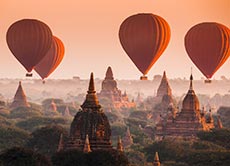
The ruins of the city of Bagan Located 190 km south of Mandalay, are the most impressive relics of the first period of Myanmar greatness from 11th to 13 th Century With Over 2000 temples and monuments Bagan is the richest archaeological site in Asia
Environs is Mount Popa, an extinct volcano about 80 km south of Bagan is known as the abode of legendary Nats or Spirit gods.
Bagan Museum
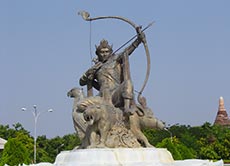
Sarabha Gateway
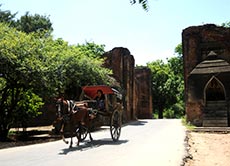
The ruins of the main gate on the east wall are all that remain of the old 9th century city. The gate is guarded by brother and sister nats, the male on the left, the female on the right. Traces of old stucco can still be seen on the gateway.
Ananda Temple
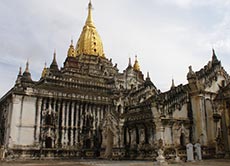
Shwegugyi Temple
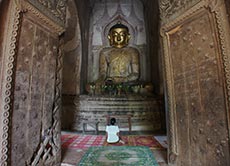
Built by Alaungsithu in 131 1, this temple is an early example of a transition in architectural styles which resulted in airy, lighter buildings. The temple is also no- table for its fine stucco canings and for the stone slabs in the inner Wall, which tell its history including the fact that its construction took seven months.
Thatbyinnyu Temple
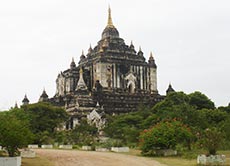
The highest temple in Bagan, the “omniscience” temple rises to 61 metres (200 feet) and was built by Alaungsithu around the mid-12th century. Repairs to earthquake damage were completed in 1979. Slightly south-west of the Thatbyinnyu in a monastery compound there are stone supports which once held the temp1e’s huge bronze bell. North-east of the temple stands a small “tally pagoda“ which was built of one brick for every 10,000 bricks used in the main temple.
Pitakat Taik
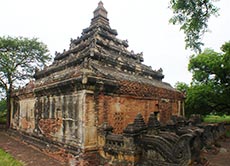
Following the sack of Thaton, King Anawrahta carted off 30~elephant loads of Buddhist scriptures and built this library to house them in 1058. It was repaired in 1738. The architecture of the square building is notable for the perforated stone windows and the plaster carvings on the roof in imitation of Myanmar wood carvings.
Thandawgya Image
This six metre (19 feet) high stone image of the Buddha was built in 1284.
Sulamani Temple
Bupaya Pagoda
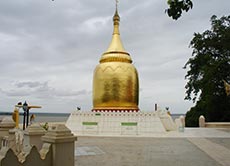
Mahabodhi Pagoda
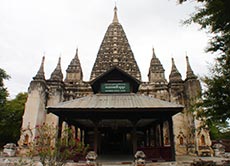
Modelled after Indian style temples, this pagoda is unique in Myanmar. It was built during the reign of Nantaungmya (1211-1234). The pyramidal spire, covered in niches each enclosing a seated Buddha figure, rises from a square block.
Shwesandaw Pagoda
Shinbinthalyaung
Dhammayangyi Temple
Nathlaung Kyaung
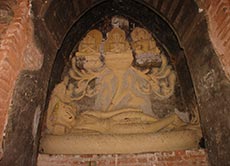
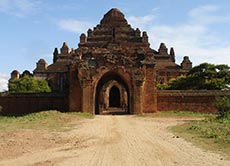
Slightly to the east of the Thatbyinnyu this is the only Hindu temple remaining in Bagan, It was built in 931 by King Taungthugyi, this was about a century before the southern school of Buddhism came to Bagan following the conquest of Thaton. The temple is dedicated to the Hindu god Vishnu and around the outside wall are figures of the “ten Avatars”, Gautama Buddha was said to be the ninth among them. The temple may have been built by Indian settlers in Bagan – possibly the skilled workers brought to construct other temples.
Gawdawpalin Temple
One of the largest and most imposing of the Bagan temples, the Gawdawpalin was built during the reign of Narapatisithu (1l74-1211) but was very badly damaged by the earthquake in 1975, The reconstruction was started in early ’79. In plan, it is somewhat similar to the Thatbyinnyu – cube shaped with Buddha images on the four sides of the ground floor. The top of the stupa, before it fell, reached 55 metres [180 feet) high.